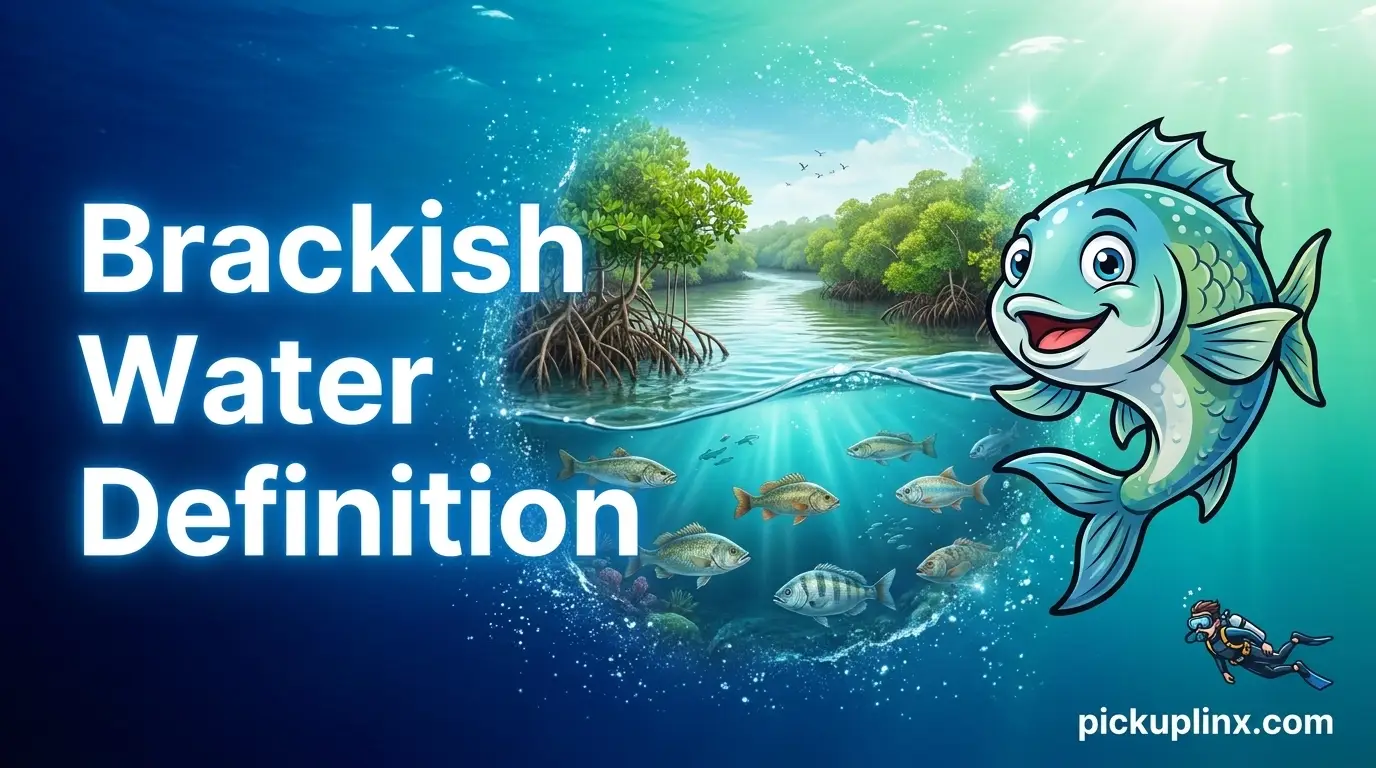
Brackish Water Definition is water that contains more salt than fresh water but less salt than seawater. It forms when fresh water from rivers, streams, or groundwater mixes with salty ocean water. This type of water is common in estuaries, coastal wetlands, lagoons, and river mouths. Its salt level can change with rain, tides, and the flow of nearby rivers.
Many plants, fish, and other living things have special ways to survive in these conditions. Understanding the brackish water definition helps explain coastal habitats, water quality, and why some water sources need treatment before use.
1. What Is the Brackish Water Definition?
The term brackish water describes water with a salt level between that of fresh water and seawater. It contains dissolved salts, mainly sodium chloride, along with other minerals. The amount of salt is often called salinity.
Fresh water usually has very little dissolved salt. Seawater has much more. Brackish water falls between these two types, though its exact salinity can vary from one place to another.
For example, a river may carry fresh water toward the sea. Near the river’s mouth, ocean water can move inland and mix with the river water. This creates a brackish environment.
Brackish water is not always the same from day to day. Heavy rain may lower its salinity, while dry weather or strong tides may increase it.
The word brackish is also used to describe water that tastes slightly salty. However, taste alone cannot tell you whether water is safe to drink. “Some brackish water may contain harmful germs, chemicals, or other pollutants. Testing and analyzing these water samples requires a great deal of attention to detail definition from environmental scientists.”
2. How Salty Is Brackish Water?
Salinity measures the amount of dissolved salt in water. Scientists often report it in parts per thousand (ppt) or practical salinity units (PSU). These units help compare water from rivers, lakes, estuaries, and oceans.
Fresh water commonly has salinity below about 0.5 ppt. Typical seawater has salinity near 35 ppt, although ocean salinity varies by location.
Brackish water generally falls between these levels. A commonly used range is about 0.5 to 30 ppt, but the exact boundaries depend on the scientific classification being used.
Here is a simple comparison:
| Water Type | Approximate Salinity | Common Location |
|---|---|---|
| Fresh water | Below 0.5 ppt | Rivers and lakes |
| Brackish water | About 0.5–30 ppt | Estuaries and coastal lagoons |
| Seawater | Around 35 ppt | Open ocean |
| Very salty water | Often above 40 ppt | Some salt lakes and evaporation ponds |
These values are general guides, not fixed limits for every setting. Some scientific systems divide brackish water into several salinity classes.
For example, water with a salinity of 10 ppt contains much less salt than typical seawater. Yet it contains far more salt than most rivers.
Knowing the salinity helps scientists study water quality and decide which plants, animals, and treatment methods are suitable.
3. How Does Brackish Water Form?
Brackish water forms when fresh water mixes with salt water. This often happens where rivers meet the sea, but other natural processes can also create it.
River and ocean mixing is one of the main causes. Rivers carry fresh water toward the coast, while tides push seawater into river channels. The two sources mix and create changing salt levels.
Groundwater movement can also produce brackish water. In coastal areas, seawater may enter underground water sources when natural conditions allow it. This can increase the salinity of wells.
Evaporation may raise salt levels in shallow coastal waters. When water evaporates, most dissolved salts remain behind. If fresh water does not replace the lost water, salinity can rise.
Storms and seasonal changes can affect the balance. Heavy rain may bring more fresh water into an estuary. Drought can reduce river flow and allow salt water to move farther inland.
For example, an estuary may have lower salinity after several days of heavy rain. “During a dry period, the same location may become much saltier. These changes make brackish water a dynamic part of many coastal systems, just like the continuous succession definition of species changes an ecosystem over time.”
4. Where Is Brackish Water Found?
Brackish water occurs in many parts of the world, especially near coastlines. It can also develop in enclosed bodies of water where fresh water and salt water mix or where evaporation changes salinity.
Common locations include:
- Estuaries: Places where rivers flow into the sea.
- River mouths: Areas where river water meets coastal seawater.
- Coastal lagoons: Shallow water bodies partly separated from the ocean.
- Mangrove forests: Coastal habitats shaped by tides and changing salinity. These areas hold deep cultural value for local communities, preserving a unique definition of tradition in coastal fishing practices.
- Salt marshes: Wetlands that often contain water with varying salt levels.
- Brackish groundwater: Underground water that contains more salt than typical fresh water.
- Some enclosed seas: Water bodies where river input, ocean exchange, and evaporation affect salinity.
The Baltic Sea is a well-known example of a large body of water with relatively low salinity compared with the open ocean. River input and limited exchange with the North Sea help shape its brackish conditions.
Estuaries are especially important because their salt levels can change over short distances. Water near a river may be almost fresh, while water closer to the ocean may be much saltier.
The location and movement of water determine how brackish a place becomes.
5. Brackish Water vs. Fresh Water vs. Salt Water
These three types of water differ mainly in their salt content. Their differences affect drinking water, farming, aquatic life, and many natural processes.
Fresh water has very low salinity. It is found in most rivers, lakes, and many groundwater sources. People use treated fresh water for drinking, cooking, cleaning, and irrigation.
Brackish water has a middle level of salinity. It is common in coastal areas where fresh water and seawater mix. Some species thrive in it, but many freshwater species cannot tolerate large changes in salt levels.
Salt water has a higher salt content. Seawater is the most familiar example. It supports marine ecosystems but generally needs desalination before it can be used as drinking water.
Consider a river that flows into an ocean. Far upstream, its water may be fresh. Near the mouth, it may become brackish. Beyond the mixing zone, the water may have a salinity closer to that of the sea.
This gradual change creates different habitats for living things.
It is also important to remember that salt content is only one part of water quality. Clear water is not always safe, and water with low salinity may still contain pollutants or harmful microorganisms.
6. Plants and Animals That Live in Brackish Water
Brackish water supports many plants and animals that can handle changes in salinity. These organisms have adaptations that help them manage the movement of water and salts in their bodies.
Some fish move between fresh water and salt water during their life cycle. Salmon, for example, can pass through estuaries as they move between rivers and the ocean. Other fish, such as many mullets, can live in waters with changing salinity.
Crabs, shrimp, mollusks, and small aquatic animals also live in brackish habitats. The species found in a particular area depend on its salinity, temperature, oxygen levels, and food supply.
Mangrove trees are well known for growing in many brackish coastal settings. Some species can limit the salt they take in, while others can remove or release excess salt through specialized structures.
Brackish wetlands also provide important nursery areas for young fish and shellfish. These habitats offer food and shelter from some predators.
However, not every organism can survive in brackish water. Many freshwater species are harmed by high salinity, while some marine species need salt levels higher than those found in many estuaries.
The balance of species depends on both the environment and each organism’s ability to cope with change.
7. Common Uses of Brackish Water
Although brackish water is not suitable for every purpose, it has several useful applications. Its value depends on its salt level, cleanliness, and the needs of the activity.
Aquaculture: Some fish, shrimp, and shellfish are raised in brackish ponds. Farmers must manage salinity, oxygen, temperature, and disease risks to keep the animals healthy.
Industrial use: Some industries can use treated or untreated brackish water for specific processes. The right choice depends on the water’s mineral content and the equipment involved.
Scientific research: Researchers study brackish water to learn how salt levels affect ecosystems, water movement, and animal behavior.
Desalination: Brackish groundwater can be treated to remove dissolved salts. This may provide water for communities where fresh water is limited.
Wetland management: Water managers may protect or restore brackish wetlands to support wildlife, reduce erosion, and maintain coastal habitats.
For example, a farm may use brackish water to raise a shrimp species that can tolerate its salinity. The same water might damage a crop that needs low-salt irrigation water.
This is why testing matters. Water should be checked before it is used for farming, industry, or household needs.
8. Can You Drink Brackish Water?
Brackish water should not be assumed safe to drink. Its dissolved salts may be too high for regular drinking, and it may also contain germs, chemicals, or other contaminants.
Drinking highly salty water can increase the body’s salt load and place extra strain on the kidneys. The risk depends on the salinity, the amount consumed, and a person’s health.
Boiling water can kill many disease-causing germs, but it does not remove dissolved salts. In fact, evaporation during boiling may make the remaining water saltier.
Brackish water can often be treated with suitable desalination systems. Reverse osmosis is one common method. It uses a special membrane to remove much of the dissolved salt. Other treatment methods may be used depending on the water source and its quality.
Before using a brackish source for drinking, people should:
- Test its salinity and check for harmful contaminants.
- Use a treatment system designed for that water source.
- Follow the system’s maintenance and filter replacement instructions.
- Test the treated water when needed to confirm it meets drinking-water standards.
A simple water filter may remove some particles or improve taste, but it may not remove dissolved salts.
Safe drinking water requires proper treatment and testing, not just a clear appearance or mild taste.
9. Environmental Problems Affecting Brackish Water
Brackish ecosystems face several environmental pressures. Changes in rainfall, river flow, coastal development, and pollution can alter their natural balance.
Saltwater intrusion occurs when seawater moves into freshwater aquifers, rivers, or other areas where it was not previously common. It can make drinking water sources and farmland more difficult to use.
Pollution from farms, factories, sewage, and urban runoff can harm fish, plants, and other organisms. Extra nutrients may also cause excessive algae growth, which can lower oxygen levels in the water.
Dams and water diversion can reduce the amount of fresh water reaching estuaries. This may allow salt water to move farther upstream and change the habitat.
Climate change and rising sea levels can increase the risk of saltwater intrusion in some coastal areas. Changes in rainfall and drought may also affect river flow and salinity.
Habitat loss is another concern. Coastal wetlands may be damaged by land development, drainage, or changes to natural water flow.
Protecting brackish environments requires careful water management, pollution control, and the conservation of wetlands. Monitoring salinity and other water conditions can help communities detect problems early.
10. How Scientists Measure and Study Brackish Water
Scientists measure brackish water to understand its salt content and how the environment changes over time. The results help guide research, conservation, and water treatment.
One common tool is a salinity meter. It measures properties of water that can be used to estimate salinity. Some devices use electrical conductivity, because dissolved salts allow water to conduct electricity.
Scientists may also collect water samples and test them in a laboratory. These tests can measure dissolved salts, nutrients, metals, and other substances.
Several factors are often measured together:
- Salinity: The amount of dissolved salt.
- Temperature: Affects aquatic life and water density.
- Dissolved oxygen: Needed by many aquatic organisms.
- pH: Shows how acidic or alkaline the water is.
- Turbidity: Indicates how cloudy the water is because of suspended particles.
- Contaminants: May include harmful chemicals or microorganisms.
Researchers may test the same site at different times of day or during different seasons. This helps them see how tides, rainfall, and river flow affect water quality.
For example, samples collected during a high tide may have higher salinity than samples taken after heavy rain. Repeated measurements can show whether these changes are normal or linked to a larger environmental problem.
People Also Ask About Brackish Water Definition
1. What is brackish water in simple words?
Brackish water is water that contains more salt than fresh water but less salt than seawater. It often forms where rivers meet the ocean.
2. What is the salinity range of brackish water?
A common general range is about 0.5 to 30 parts per thousand. Exact ranges may differ depending on the classification system and the type of water body.
3. Is brackish water the same as seawater?
No. Brackish water contains less salt than typical seawater. It often forms when fresh water mixes with ocean water.
4. Where can you find brackish water?
It is common in estuaries, river mouths, coastal lagoons, mangrove forests, salt marshes, and some groundwater sources.
5. Can fish live in brackish water?
Yes. Many fish and other aquatic animals can live in brackish conditions. Some species tolerate a wide range of salinity, while others need more stable conditions.
6. Is brackish water safe for farming?
It depends on the crop, soil, salt level, and irrigation method. High salinity can harm many plants and reduce crop growth, so water should be tested before use.
7. How can brackish water become fresh water?
Brackish water can be desalinated using methods such as reverse osmosis. These systems remove much of the dissolved salt, but the treated water must still be checked for safety.
Conclusion
The brackish water definition refers to water with a salt level between fresh water and seawater. It forms in places such as estuaries, coastal lagoons, and some underground water sources. These environments support plants and animals adapted to changing salinity and play an important role in coastal ecosystems.
Brackish water can also be useful for aquaculture, industry, and desalination. However, its quality must be checked before use, especially for drinking or irrigation. Learning how brackish water forms, where it occurs, and how its salt level changes helps us understand and protect this valuable water resource.

Julian Lovett – A passionate writer who shares charming pickup lines, romantic ideas, and fun love content to help people spark connections and smiles. ❤️