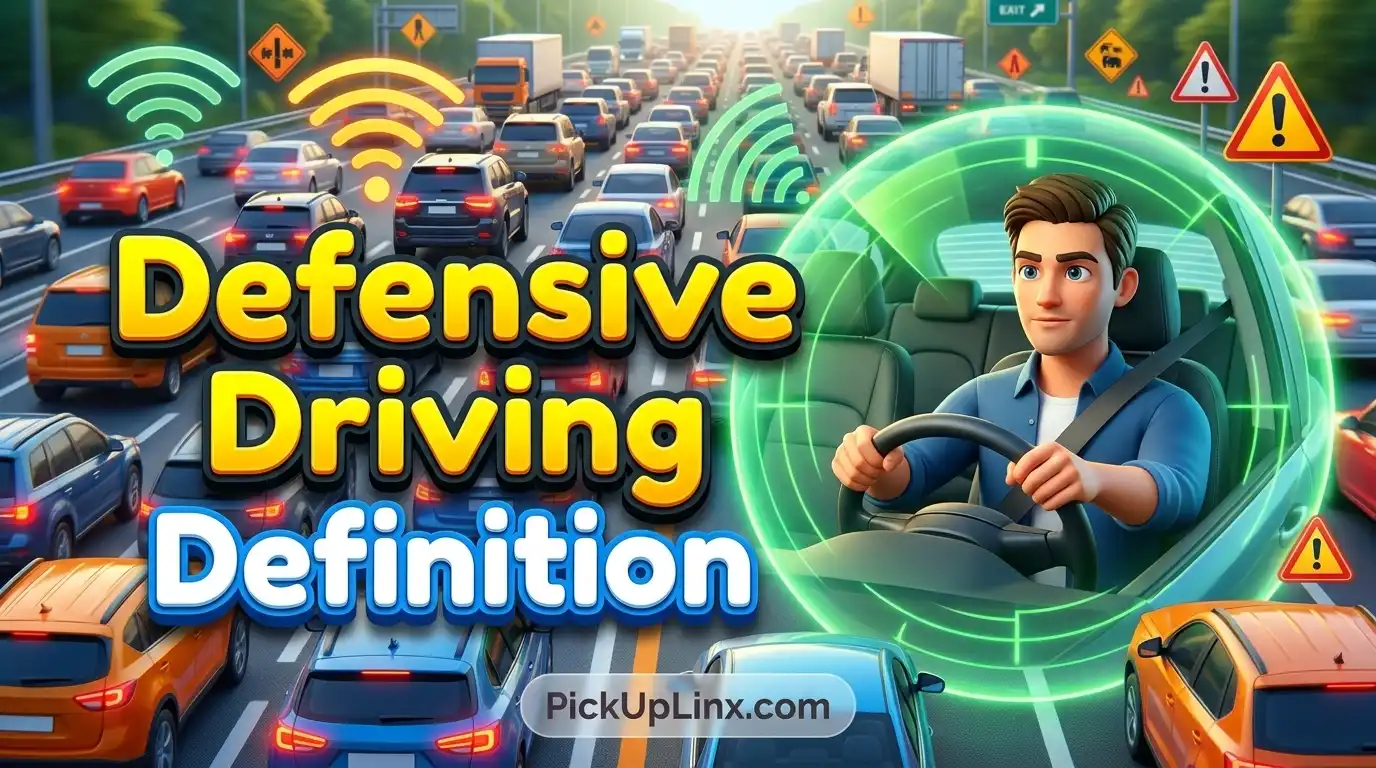
Defensive Driving Definition is a way of driving that helps prevent crashes and reduce road risks. It means staying alert, following traffic rules, keeping a safe distance, and watching for possible dangers.
A defensive driver does not focus only on their own actions. They also pay attention to other drivers, cyclists, pedestrians, and road conditions. For example, slowing down when the road is wet can help prevent a crash.
This driving style is useful for new and experienced drivers alike. Learning the defensive driving definition can help you make safer choices, avoid common mistakes, and protect everyone on the road.
1. What Is the Definition of Defensive Driving?
Defensive driving means driving with care and taking steps to avoid danger before it leads to a crash. It involves watching the road, thinking ahead, and making safe choices even when other road users make mistakes.
A defensive driver does not assume that every driver will follow the rules. Instead, they leave enough space to stop, check their surroundings, and prepare for sudden changes.
For example, imagine that a car ahead brakes without warning. A driver who follows too closely may not have enough time to stop. A defensive driver keeps a safe gap and has more time to react.
This approach also means changing your driving to match the conditions. You may need to slow down in heavy rain, increase your following distance at night, or stop when a person enters a crosswalk.
Defensive driving is not about being afraid of the road. It is about being aware, patient, and ready to respond safely.
The goal is simple: reduce risk, prevent crashes, and protect lives.
2. Why Is Defensive Driving Important?
Defensive driving is important because road conditions and traffic can change in seconds. A driver may face sudden braking, poor visibility, loose objects, or a person crossing the road.
Safe driving habits can help reduce the chance of a crash and limit its effects. They also give drivers more time to make good decisions.
Here are some key benefits:
- Fewer crash risks: Looking ahead can help you spot hazards early.
- Better control: A suitable speed makes it easier to respond to changes.
- Safer following distance: Enough space gives you more time to brake.
- Less stress: Planning ahead can reduce rushed decisions.
- Better awareness: Checking mirrors and blind spots helps you understand nearby traffic.
- Protection for others: Careful driving helps protect passengers, cyclists, and pedestrians.
Consider a driver approaching a busy intersection. Instead of speeding up to beat a changing traffic light, the driver checks the signal, watches nearby vehicles, and prepares to stop.
This simple choice can reduce risk.
Defensive driving cannot prevent every crash. Another road user may act in an unsafe way, or a sudden event may leave little time to react. However, good driving habits can improve your chances of responding safely.
3. What Are the Main Principles of Defensive Driving?
Defensive driving relies on a few basic principles. These habits help drivers notice risks and avoid unsafe actions.
Stay alert. Keep your attention on driving. Avoid using a phone or doing anything that takes your eyes, hands, or mind away from the road.
Look ahead. Watch beyond the vehicle in front of you. This helps you notice traffic lights, stopped vehicles, roadworks, and other hazards early.
Keep a safe distance. Leave enough room between your vehicle and the one ahead. More space gives you more time to respond.
Control your speed. Follow speed limits and slow down when road, weather, or traffic conditions require it.
Expect mistakes. Do not assume that another driver will signal, stop, or give way correctly.
Communicate clearly. Use indicators before turning or changing lanes. Check that the move is safe before acting.
Stay calm. Do not respond to rude gestures, aggressive driving, or pressure from other road users with anger.
For example, if a vehicle begins to move into your lane, avoid a sudden angry response. Ease off the accelerator if safe, maintain control, and create space when possible.
These principles work best when used together. Awareness helps you spot a hazard, while speed control and safe spacing give you more time to respond.
4. The Four Steps of Defensive Driving
Many defensive driving lessons teach a simple process: see, understand, predict, and act. These steps help drivers make safer choices.
Step 1: See the Hazard
Look for possible dangers around your vehicle. These may include a car braking ahead, a child near the road, a cyclist, or a vehicle waiting to enter traffic.
Step 2: Understand the Risk
Think about how the hazard could affect your path. A parked vehicle may hide a person. A wet bend may make it harder to keep control.
Step 3: Predict What Could Happen
Consider what other road users might do next. A car near an exit may change lanes. A pedestrian waiting at a crossing may step onto the road.
Prediction does not mean guessing with certainty. It means preparing for reasonable possibilities.
Step 4: Act Safely
Choose a response that reduces risk. You may need to slow down, increase the gap, change lanes when safe, or stop.
For example, imagine you are driving past a row of parked cars. You notice a ball rolling into the road. A child may follow it. You ease off the accelerator, cover the brake if appropriate, and prepare to stop.
This process gives you a plan instead of forcing you to react at the last moment.
5. How to Maintain a Safe Following Distance
A safe following distance is one of the most important parts of defensive driving. It gives you time to notice a problem and stop without hitting the vehicle ahead.
One useful guide is the three-second rule. Choose a fixed object, such as a sign or tree. When the vehicle ahead passes it, count the seconds until your vehicle reaches the same point.
If you reach it in less than three seconds, increase the gap. In rain, darkness, poor visibility, or other difficult conditions, leave more space. Larger vehicles and heavy loads may also need more stopping distance.
The three-second rule is a general guide, not a guarantee of safety. The right gap depends on speed, road conditions, vehicle condition, and local driving guidance.
| Driving Condition | Safer Approach |
|---|---|
| Dry road and clear view | Keep at least a suitable basic gap |
| Heavy rain | Increase following distance |
| Fog or poor visibility | Slow down and leave more room |
| Night driving | Allow extra time to respond |
| Behind a large truck | Leave more space and keep a clear view |
| Slippery road | Reduce speed and avoid sudden braking |
For example, if the car ahead brakes suddenly on a wet road, a larger gap gives you more time to slow down. Following too closely removes that safety margin.
Do not focus only on the vehicle directly ahead. Look farther down the road so you can notice changes in traffic before they reach you.
6. Common Defensive Driving Techniques
Defensive driving uses simple techniques to help drivers manage everyday road risks. These methods should be adjusted to suit the road, vehicle, and traffic.
Scan the road regularly. Look ahead, check mirrors, and notice vehicles on both sides. Do not stare at one spot for too long.
Check blind spots. Mirrors do not show every area around a vehicle. Before changing lanes, check the relevant blind spot and make sure there is enough space.
Signal early. Use your indicators before turning or moving into another lane. Signaling does not give you the right to move if the path is unsafe.
Brake smoothly. Avoid sudden braking when it is not needed. Leave enough space to slow down in a controlled way.
Choose a safe speed. A posted speed limit is not always the safest speed for every condition. Slow down when visibility is poor or the road is slippery.
Keep an escape space. When possible, avoid being boxed in by traffic. Leave enough room to respond if the vehicle ahead stops.
Avoid distractions. Set navigation and music before moving. Never read or type messages while driving.
For example, before changing lanes on a busy road, check your mirrors, signal, check the blind spot, and move only when there is enough room. Do not rely on the indicator alone.
These techniques help turn defensive driving into a set of practical habits rather than a rule you remember only during a lesson.
7. Defensive Driving in Bad Weather and Difficult Conditions
Weather and road conditions can make driving more dangerous. Defensive drivers adjust their speed and actions to match what they can see and how much grip their tires have.
Driving in Rain
Wet roads may reduce tire grip and increase stopping distance. Slow down, leave extra space, and avoid sudden steering or braking.
Driving in Fog
Fog can reduce visibility and make it harder to judge distance. Slow down, use the appropriate lights for the conditions, and avoid high beams when they reflect off the fog. If visibility becomes too poor to continue safely, pull over in a safe place away from traffic.
Driving at Night
Darkness can hide pedestrians, animals, and objects. Keep your windshield clean, use suitable headlights, and drive at a speed that allows you to stop within the distance you can see.
Driving on Loose or Slippery Surfaces
Gravel, mud, ice, and loose sand may affect traction. Reduce speed before bends, avoid sudden movements, and follow local guidance for the road conditions.
Driving in Heavy Traffic
Leave space, watch brake lights farther ahead, and avoid rushing to close every gap. A small delay is better than an unsafe move.
A defensive driver also checks the vehicle before a trip. Tires, lights, brakes, windshield wipers, and mirrors should be in suitable working order.
No driving technique makes every condition safe. If the road becomes too dangerous, delaying the trip or stopping in a safe location may be the best choice.
8. Common Defensive Driving Mistakes to Avoid
Even careful drivers can develop habits that increase risk. Recognizing these mistakes is an important step toward safer driving.
Following too closely: This leaves little room to stop when traffic changes suddenly.
Driving too fast for conditions: A driver may stay within the posted limit but still travel too fast for heavy rain, poor visibility, or a sharp bend.
Using a phone: Looking at a message for a few seconds can mean missing an important change in traffic.
Assuming others will act correctly: Another driver may fail to signal or stop. Stay alert and leave room to respond.
Changing lanes without checking: Mirrors alone may not reveal a vehicle in a blind spot.
Driving while tired: Fatigue can slow reactions and reduce attention. Stop in a safe place and rest if you become drowsy.
Reacting with anger: Chasing another vehicle, blocking a driver, or making sudden moves can turn a small problem into a serious danger.
Ignoring vehicle problems: Worn tires, faulty brakes, and broken lights can affect safety.
For example, a driver may feel annoyed when another car moves into their lane. Speeding up to block it is not a safe response. Creating space and staying calm is usually the better choice.
Defensive driving means focusing on what you can control. You cannot control every road user, but you can control your attention, speed, space, and response.
9. Defensive Driving Courses and Training
A defensive driving course teaches drivers how to identify hazards, make safer choices, and respond to common road risks. Courses may include classroom lessons, online study, practical exercises, or a mix of these methods.
Topics often include:
- Hazard awareness and risk assessment
- Safe following distances
- Speed and space management
- Distracted and impaired driving risks
- Driving in poor weather
- Sharing the road with pedestrians and cyclists
- Handling aggressive road behavior
- Vehicle safety checks
Some courses are designed for new drivers. Others help experienced drivers improve their habits or meet workplace training needs.
For example, a delivery driver may take a course to learn how to manage tight schedules without speeding or following too closely. A new driver may use training to gain confidence when approaching busy intersections.
Course quality and recognition vary by country and provider. Before signing up, check the instructor’s qualifications, the course content, and whether the program is recognized by the relevant licensing authority, employer, or insurer.
A course may help improve knowledge and awareness, but completing it does not automatically make someone a safe driver. Skills need regular practice, and drivers must continue to follow local traffic laws.
10. How Defensive Driving Can Save Lives
Defensive driving can help prevent crashes by giving drivers more time to notice hazards and respond safely. It also encourages patience and respect for other road users.
Consider a busy street near a school. A child may step toward the road, a car may stop suddenly, or a cyclist may move around a parked vehicle. A driver who scans ahead, travels at a suitable speed, and leaves enough space has a better chance of responding safely.
The same habits matter on highways. A driver who checks mirrors before changing lanes, avoids distractions, and keeps a safe gap reduces the risk of a collision.
Defensive driving can also protect people outside the vehicle. Pedestrians, motorcyclists, cyclists, and road workers may have less protection than people inside a car.
Safe driving depends on more than quick reactions. It requires planning, awareness, patience, and sound judgment.
Remember these key habits:
- Keep your attention on the road.
- Look ahead and scan your surroundings.
- Match your speed to the conditions.
- Leave enough space to stop.
- Expect hazards and prepare for them.
- Stay calm when others make mistakes.
These actions cannot remove every danger, but they can reduce avoidable risks and help make roads safer for everyone.
People Also Ask About Defensive Driving Definition
1. What is defensive driving in simple words?
Defensive driving means driving carefully, watching for possible hazards, and taking steps to avoid crashes. It includes keeping a safe distance, controlling speed, and staying alert.
2. What is an example of defensive driving?
Slowing down when approaching a busy pedestrian crossing is one example. A defensive driver watches for people who may cross and prepares to stop safely.
3. What are the main rules of defensive driving?
Key rules include staying alert, following traffic laws, leaving enough space, using signals, checking blind spots, and adjusting speed to road and weather conditions.
4. What are the four steps of defensive driving?
A useful approach is to see a hazard, understand the risk, predict what may happen, and act safely. This helps drivers respond before a dangerous situation gets worse.
5. What is the difference between defensive and aggressive driving?
Defensive driving focuses on safety, patience, and hazard awareness. Aggressive driving involves risky actions such as speeding, tailgating, or unsafe lane changes that may endanger others.
6. Can defensive driving prevent all accidents?
No. Some crashes happen because of sudden events or actions outside a driver’s control. However, defensive driving can reduce many avoidable risks and improve the chance of a safe response.
7. Is a defensive driving course worth taking?
A good course can improve hazard awareness, road knowledge, and decision-making. Its value depends on the course quality and your needs. Check whether it is recognized where you live.
Conclusion
The defensive driving definition describes a safe driving approach based on awareness, planning, patience, and risk reduction. It helps drivers notice hazards early, maintain safe distances, adjust to road conditions, and respond calmly to mistakes made by others. These habits are useful for new and experienced drivers in busy streets, on highways, and in bad weather.
Although no method can prevent every crash, defensive driving can lower avoidable risks and protect drivers, passengers, and other road users. Practicing these skills every day is an important step toward safer roads.

Julian Lovett – A passionate writer who shares charming pickup lines, romantic ideas, and fun love content to help people spark connections and smiles. ❤️